The biggest misconception about AI in marketing is that it’s only for companies with Silicon Valley budgets. In reality, some of the most powerful AI marketing tools cost less than your monthly chai budget – and they’re helping small businesses compete with giants like never before.
The AI Marketing Reality Check
Let’s be honest about what AI marketing actually means for small businesses. It’s not about building robots or hiring data scientists. It’s about using smart tools to do repetitive tasks faster, understand your customers better, and create content that actually converts.
Think of AI as your digital assistant that never sleeps, never gets tired, and learns from every interaction. It can write email subject lines, schedule social media posts, analyze customer behavior, and even predict what products people want to buy – all while you focus on running your business.
Free and Affordable AI Tools That Actually Work
Content Creation: Tools like ChatGPT, Jasper AI, and Copy.ai can help you write blog posts, social media captions, and email newsletters. Instead of staring at a blank screen for hours, you can generate ideas and first drafts in minutes.
Social Media Automation: Platforms like Buffer and Later use AI to suggest optimal posting times, hashtags, and even content ideas based on your audience’s behavior patterns.
Email Marketing Intelligence: Tools like Mailchimp and ConvertKit use AI to optimize send times, subject lines, and content personalization – often increasing open rates by 20-30%.
Customer Service Chatbots: Simple chatbot tools like ManyChat or Tawk.to can handle basic customer questions 24/7, freeing you to focus on complex issues that need human attention.
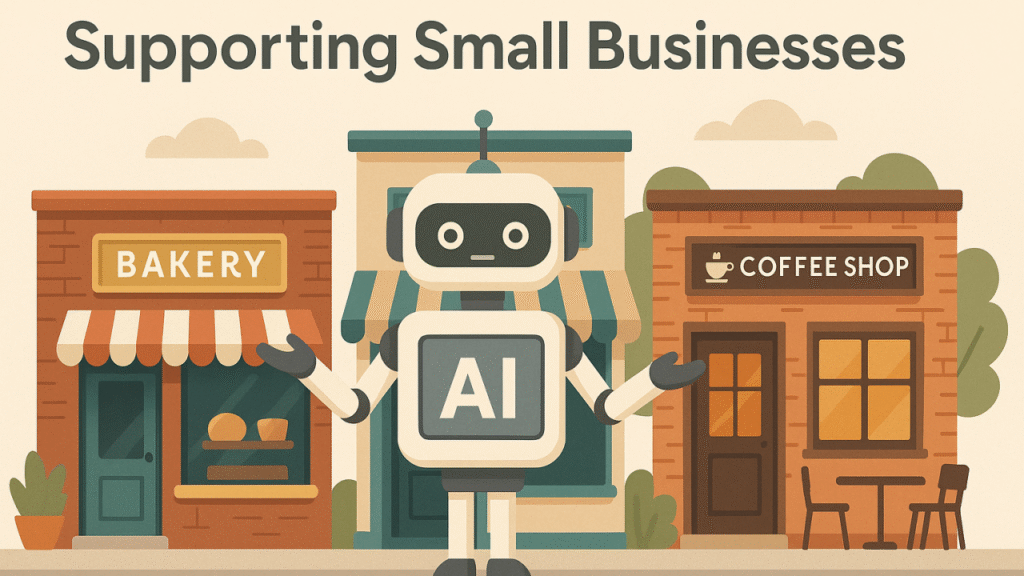
The Smart Implementation Strategy
The key to successful AI marketing isn’t using every tool available – it’s choosing the right tools for your specific needs and implementing them gradually.
Start with One Problem: Don’t try to automate everything at once. Pick your biggest time-consuming task – maybe it’s writing social media posts or responding to basic customer questions – and automate that first.
Learn the Prompting Art: Good AI results depend on good inputs. Instead of asking AI to “write a social media post,” ask it to “write an engaging Instagram caption for a family restaurant in Pune highlighting today’s special thali, using a warm, welcoming tone with local references.”
Maintain Your Human Touch: AI should enhance your personality, not replace it. Use AI-generated content as a starting point, then add your unique voice, local references, and personal experience.
Real-World Success Stories
A small boutique in Jaipur started using AI to analyze which of their Instagram posts got the most engagement. The AI identified that posts featuring traditional jewelry got 300% more engagement than western accessories. This insight helped them adjust their inventory and marketing focus, increasing sales by 45% in three months.
A neighborhood restaurant in Kolkata used an AI chatbot to handle reservation inquiries and basic menu questions. This freed up staff time during busy periods and improved customer experience. The chatbot now handles 60% of initial customer interactions, allowing human staff to focus on food quality and in-person service.
The Data Advantage
AI’s biggest advantage isn’t just automation – it’s insights. AI tools can spot patterns in your customer behavior that would take humans weeks to identify. They can tell you:
- Which content types drive the most engagement
- What times your audience is most active online
- Which customers are most likely to make repeat purchases
- What products to recommend to specific customer segments
Avoiding Common AI Pitfalls
Don’t Lose Your Local Flavor: AI can sometimes generate generic content that lacks local relevance. Always review and personalize AI-generated content with local references, cultural nuances, and your unique business personality.
Quality Over Quantity: It’s tempting to use AI to create massive amounts of content, but quality still matters more than quantity. Focus on creating valuable, relevant content rather than flooding your channels.
Keep Learning and Adapting: AI tools improve constantly, and new ones emerge regularly. Set aside time monthly to explore new features and tools that might benefit your business.
Budget-Friendly Implementation Plan
Month 1: Start with free AI writing tools for content creation. Experiment with different prompts and find what works for your brand voice.
Month 2: Implement basic social media automation. Use AI to schedule posts and suggest optimal posting times.
Month 3: Add email marketing automation. Set up AI-powered email sequences for new customers and abandoned cart recovery.
Month 4: Explore customer service automation with simple chatbots for frequently asked questions.
The Future is Already Here
AI marketing isn’t coming – it’s here, and it’s already giving smart small businesses unfair advantages over competitors who ignore it. The businesses that start experimenting now will be the ones dominating their local markets tomorrow.
Remember, you don’t need to understand how AI works technically – you just need to understand how it can help your business work smarter, not harder.